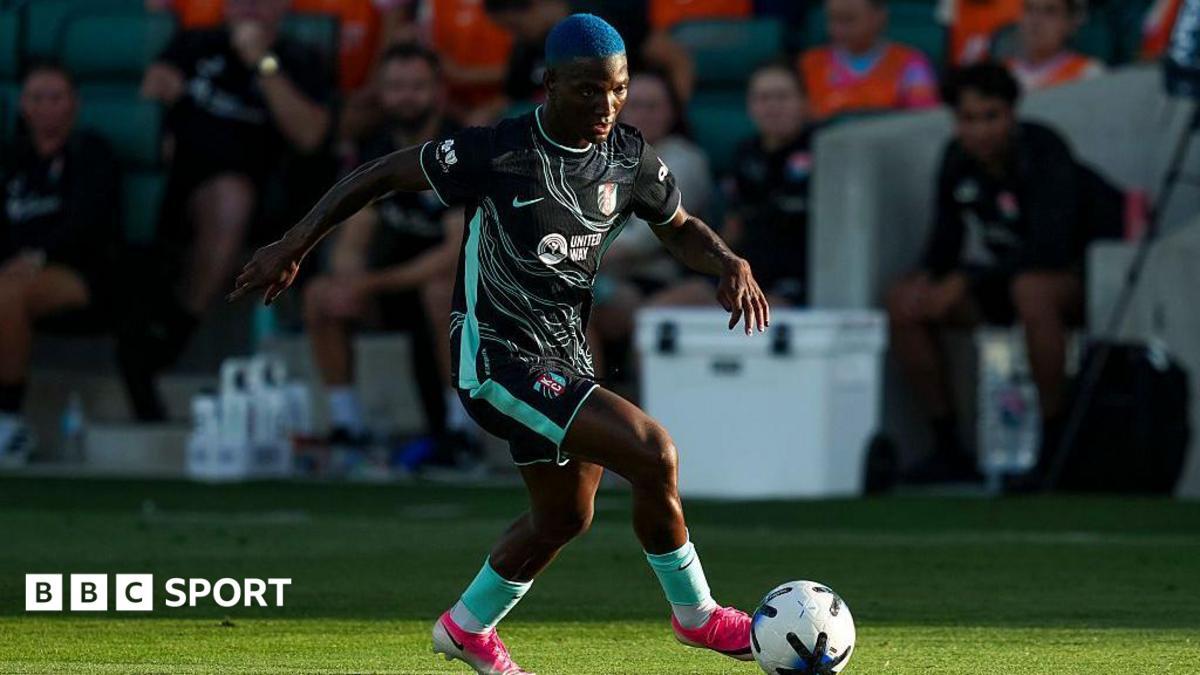
Why the Number of African Players in the Women's Super League Is So High
August 21, 2026 ·
Tremendous talent was showcased at the Women's Africa Cup of Nations, but why do so few players from Africa make it to England's Women's Super League?
Why the Number of African Players in the Women's Super League is So High
According to Bbc.
Background
Chiamaka Nnadozie, as one of four African players in the Women's Super League, has the potential to be a pioneer for other players from the continent. Playing for Brighton, Nnadozie showed that talent from Africa can compete at the highest level. His presence in the WSL could spark further interest from other clubs in signing talented African players.
Why this is important
Representation of African players in the Women's Super League is vital to increasing the visibility and development of women's football on the continent. Despite the incredible talent showcased at the Women's Africa Cup of Nations, only a handful of players have made it through to an elite league like the WSL. This shows that there are challenges in access and opportunities for African players to have a career in the world's top leagues.
Main Points
- Why the Number of African Players in the Women's Super League Is So High.
- Extraordinary talent was showcased at the Women's Africa Cup of Nations, but why are so few players from Africa making their careers in England's Women's Super League?
- Women's Super League: Why are there so few African players? - BBC Sport
This month, the Women's Africa Cup of Nations showcased a lot of incredible talent, but the question is, why are so few players from the continent playing for English clubs? The Women's Super League (WSL) is known as one of the best leagues in the world, and top European players continue to arrive. One recent example is two-time Ballon d'Or winner Alexia Putellas, who joined London City Lionesses this summer, adding to the growing list of star players making the switch to the WSL.
However, in the WSL there are currently only four African players, namely Chiamaka Nnadozie (Brighton and Nigeria), Aisha Masaka (Brighton and Tanzania), Rofiat Imuran (London City Lionesses and Nigeria), and Ines Belloumou (West Ham and Algeria). This situation is not caused by a lack of talent in Africa. The National Women's Soccer League (NWSL) in the United States shows great interest in the best players from this continent, even spending large funds to recruit them. For example, Racheal Kundananji, a Zambian striker, became the most expensive female player when she joined Bay FC from Madrid CFF for £685,000 in 2024.
Her compatriot Barbra Banda, who plays for Orlando Pride, was voted BBC Women's Footballer of the Year that same year. Cameroon's Monique Ngock, who was named Wafcon player of the year, is currently with the Washington Spirit, where there are six international players from Africa playing. Temwa Chawinga earned the Golden Boot and NWSL Player of the Year honors in her first two seasons with the Kansas City Current, while her sister, Tabitha Chawinga, plays for European giant Lyon.
Several factors are obstacles for WSL clubs who want to recruit talent from Africa. One of them is the Governing Body Endorsement (GBE) criteria set out in the league registration rules. Foreign players must meet a minimum number of points in five categories to qualify for a GBE visa. These categories include the number of caps for the national team, appearances in the Women's Champions League and the ranking of the clubs they previously played for.
WSL clubs also have to compete with salaries and transfer fees offered by NWSL clubs who target the best players from Africa. Additionally, they need to devote resources to talent scouting, which is currently prioritized in Europe. The lack of coverage of domestic games in Africa and issues surrounding Wafcon are also big issues. For example, in this edition, there was confusion when the Confederation of African Football (CAF) appointed Channel 4 as the broadcast partner in England, but no matches were broadcast live in the opening round because an agreement had not been formally reached.
One of the negative impacts of this situation is that it is difficult to attract public attention to women's football in Africa. Lia Walti, the Swiss national team captain who recently joined Brighton, told BBC Sport that globally, coverage of women's football still needed to be improved. "We need to bring this game to the public. We need to force people to see it. I feel that's the way the game is starting to grow in England," he said.
Malawi made it to the Wafcon final and will appear at the Women's World Cup for the first time next year, along with champions Cameroon, and semi-finalists Algeria and Morocco. Tabitha Chawinga believes that the Malawi team has put their country on the map and shown their quality. He stated, "Nobody gave Malawi a chance to be in the final, but as you can see, we watched fantastic football. There was outstanding play from both teams."
Nnadozie, who notably became the first African goalkeeper to be nominated for the Ballon d'Or award, joined Brighton last year. He revealed that his Ballon d'Or nomination had a "huge impact" on Africa and highlighted some of the continent's best talents. "We have a lot of good players and they just need a chance to show what they can do," he said. Nnadozie is optimistic that in the near future, more players from Africa will be nominated for the Ballon d'Or. "Women's football is on the rise, and Africa cannot afford to be left behind," she added.
What happened next
With increasing attention paid to African talent, clubs in the Women's Super League may start to consider recruiting more players from the continent. Additionally, the success of players like Chiamaka Nnadozie and Aisha Masaka at Brighton could pave the way for others to follow in their footsteps. This could be an important step towards increasing the representation and quality of women's football at a global level.
Frequently Asked Questions
Who are the African players currently playing in the Women's Super League?
Currently, there are four African players in the Women's Super League, namely Chiamaka Nnadozie (Brighton and Nigeria), Aisha Masaka (Brighton and Tanzania), Rofiat Imuran (London City Lionesses and Nigeria), and Ines Belloumou (West Ham and Algeria).
Why are there so few African players in the Women's Super League?
The number of African players in the Women's Super League is very small due to several factors which are preventing WSL clubs from recruiting talent from Africa, even though there is a lot of talent on the continent.
What makes the Women's Super League known as the best league?
Women's Super League is known as one of the best leagues in the world due to the large number of top European players joining and the high quality of play.
What happened to Racheal Kundananji in the NWSL?
Racheal Kundananji becomes the most expensive female player when she joins Bay FC from Madrid CFF for £685,000 in 2024.
Who was named BBC Women's Footballer of the Year?
Barbra Banda, who plays for Orlando Pride, was named BBC Women's Footballer of the Year.