Manchester City's Goal in the Women's Champions League Accepted Although
September 23, 2026 ·
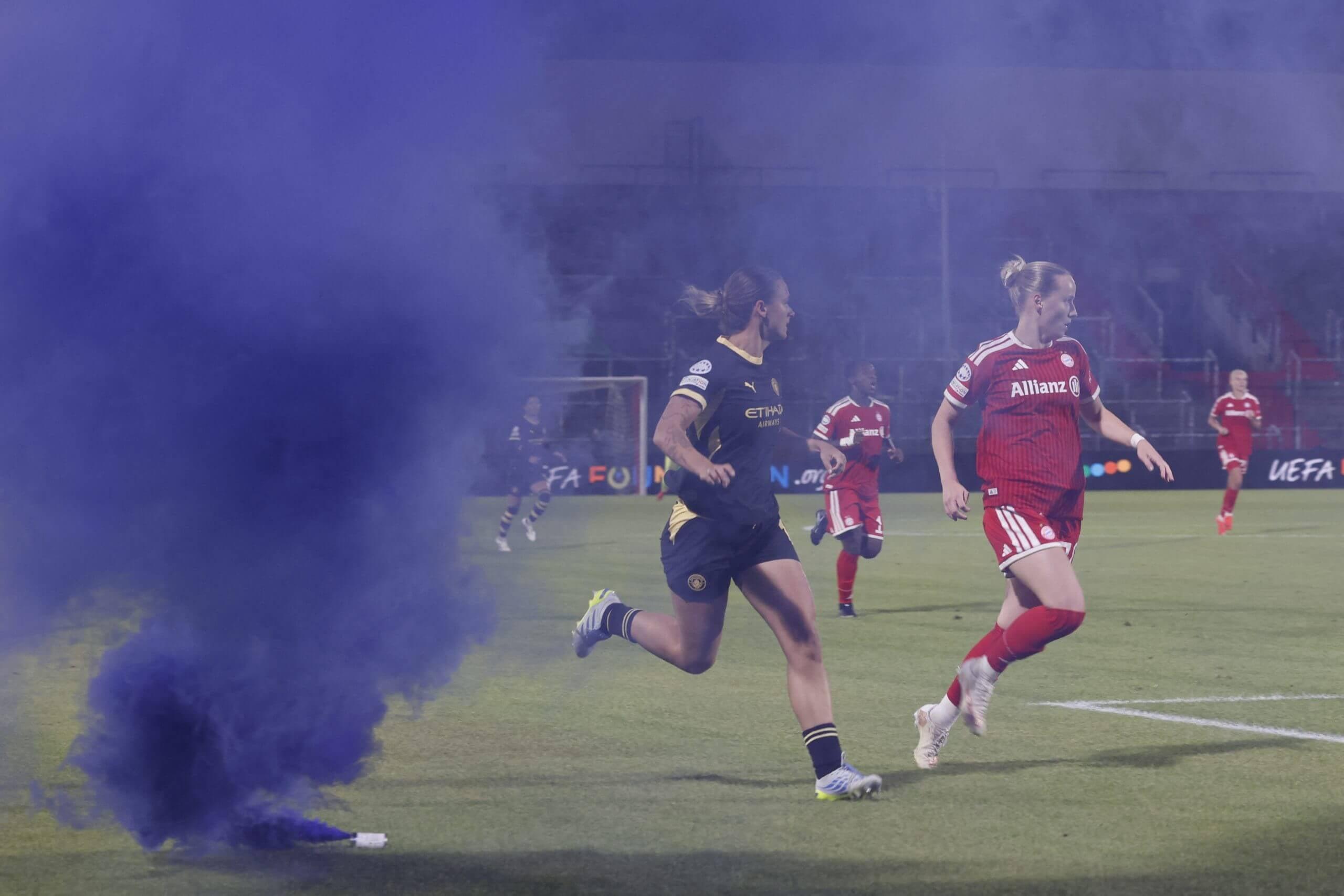
In a Women's Champions League match between Manchester City and Bayern Munich, a City goal was allowed despite flares being lit on the pitch, sparking controversy regarding pyrotechnics rules.
Manchester City's Goal in Women's Champions League Accepted Despite
Why this is important
This match shows how important safety is in the Women's Champions League, especially regarding the use of pyrotechnics on the pitch. Controversy regarding goals being legal even when flares are lit may influence perceptions of regulation and safety in Women's Football. The referee's decision to allow the goal could also have an impact on the team's confidence in the integrity of the match at the highest level.
Background
Manchester City WFC, as champions of the Women's Super League, showed resilience despite facing difficult situations. The goal scored by Beth Mead amidst the controversy showed the team's potential to come from behind. Meanwhile, Bayern Munich, led by women's football director Bianca Rech, must respond to the emerging protests and improve their team's focus in dealing with the pressure in the Women's Champions League.
Main Points
- Manchester City's goal in the Women's Champions League is accepted despite.
- In a Women's Champions League match between Manchester City and Bayern Munich, City's goal was allowed despite flares being lit on the pitch, sparking controversy over pyrotechnics rules.
- Manchester City goal in Women's Champions League allowed to stand despite flare on pitch.
Towards the end of the first half, a blue flare was thrown at the left side of the Bayern defense, in the area that was being attacked by Casparij. Despite the flares going off, City managed to avoid them and continue the attack, which led to a goal from Beth Mead after Khadija "Bunny" Shaw's initial effort was blocked. Bayern players immediately protested to referee Olatz Rivera Olmedo, who then removed the still burning flare from the pitch after the goal was scored, arguing that the flare was disrupting the flow of play and City's attack should not have been allowed to continue. However, the goal remained valid and City ended the first half with a score of 1-2.
Bianca Rech, Bayern's director of women's football, told German broadcaster ZDF after the match, "For me, the match had to be stopped. The pyrotechnics had been on the pitch for a few seconds. The players might have noticed this and could have lost their focus at that point, because the match had to be stopped."
After the interval, City had a golden opportunity to equalize after Bayern goalkeeper, Ena Mahmutovic, brought down City winger, Aoba Fujino, in the penalty box. However, Mahmutovic managed to save the penalty taken by Shaw, City's all-time top goalscorer. Despite failing to convert a penalty, City continued to press and with less than four minutes of normal time remaining, Carlotta Wamser managed to equalize.
This draw was the second time in a row that City won points from a late goal, after previously beating Liverpool 4-2 in the Women's Super League (WSL) on Saturday.
Rules regarding the use of pyrotechnics in football are set out in UEFA's Safety and Security Regulations, specifically in part 2 of Article 6, which states that when pyrotechnics are thrown onto the pitch, players and officials "must stay away" from the location and referees "may need to stop play" until the pyrotechnics are extinguished.
Law 5 of the International Football Association Board (IFAB) provides further details on how referees should handle situations involving pyrotechnics on the pitch. According to the law, referees must take action and "immediately stop play" if flares are deemed to be disrupting play. Disruption is defined as when flares fall near active play, forcing players to avoid pyrotechnics, or if smoke obstructs the view of players or officials. Only after the flare has been safely removed by an official and the air is clear again can play resume via the ball falling in its original position when play was stopped. However, the law states that a flare is not considered a nuisance if it falls on a part of the field "away from the ball and does not pose an immediate danger to any player or interfere with the action of play."
Video assistant referee (VAR) is used in the Women's Champions League. City are competing in the Champions League for the first time since the 2024-25 season, having won their first WSL title in a decade ago under manager Andree Jeglertz.
What happened next
With a 2-2 draw, Manchester City and Bayern Munich must now focus on the upcoming matches to improve their position in the Women's Champions League. City will look to improve their performance and overcome any apparent defensive problems, while Bayern will need to evaluate their strategy to ensure a better result in their next match. Both teams will try hard to achieve victory in order to improve their season outlook.
Frequently Asked Questions
What is the final score of the Manchester City vs Bayern Munich match?
The match ended with a score of 2-2.
Who scored the goal for Manchester City in this match?
The goal for Manchester City was scored by Beth Mead.
How will this result impact Manchester City's position in the Women's Champions League?
This draw affects Manchester City's position in the Women's Champions League standings, but specific details about the position were not mentioned.
When is the next match for Manchester City WFC?
Information about the next match for Manchester City WFC is not mentioned in the article.
What happens to flares on the pitch during a match?
A flare was thrown onto the pitch as Manchester City attacked, but the goal stood despite protests from Bayern players.